

Acoustic Pods vs. Building Conference Rooms:
Which Is Better For Your Growing Office?
![[HERO] Acoustic Pods vs. Building Conference Rooms: Which Is Better For Your Growing Office?](https://cdn.marblism.com/SkxVkgUMYxd.webp)
You’ve outgrown your current office setup. Again. Your team is on Zoom calls in the kitchen, the “quiet corner” by the copier is now a standing-room-only hotspot, and someone just scheduled a client presentation in the break room. Sound familiar?
If you’re staring down the barrel of expansion, you’ve got two main options: build out traditional conference rooms with drywall, permits, and contractors who promise “just two more weeks”: or bring in acoustic pods that show up, get installed in hours, and immediately solve your space crunch.
Let’s break down which option makes the most sense for your growing business in Atlanta or Texas (spoiler: it’s probably not the one involving drywall dust).
The Real Cost of Building a Conference Room
Building a traditional conference room isn’t just about slapping up some walls. You’re looking at permits, HVAC modifications, electrical work, soundproofing materials, drywall installation, paint, flooring, and furniture. Then there’s the downtime: your team tiptoeing around construction zones for weeks while productivity tanks.
Average cost breakdown for a small conference room (10×12 feet):
- Permits and planning: $500–$2,000
- Framing and drywall: $3,000–$6,000
- Electrical and HVAC: $2,000–$5,000
- Soundproofing and finishes: $2,500–$4,000
- Furniture and tech: $3,000–$8,000
Total: $11,000–$25,000+ and 4–8 weeks of construction chaos.
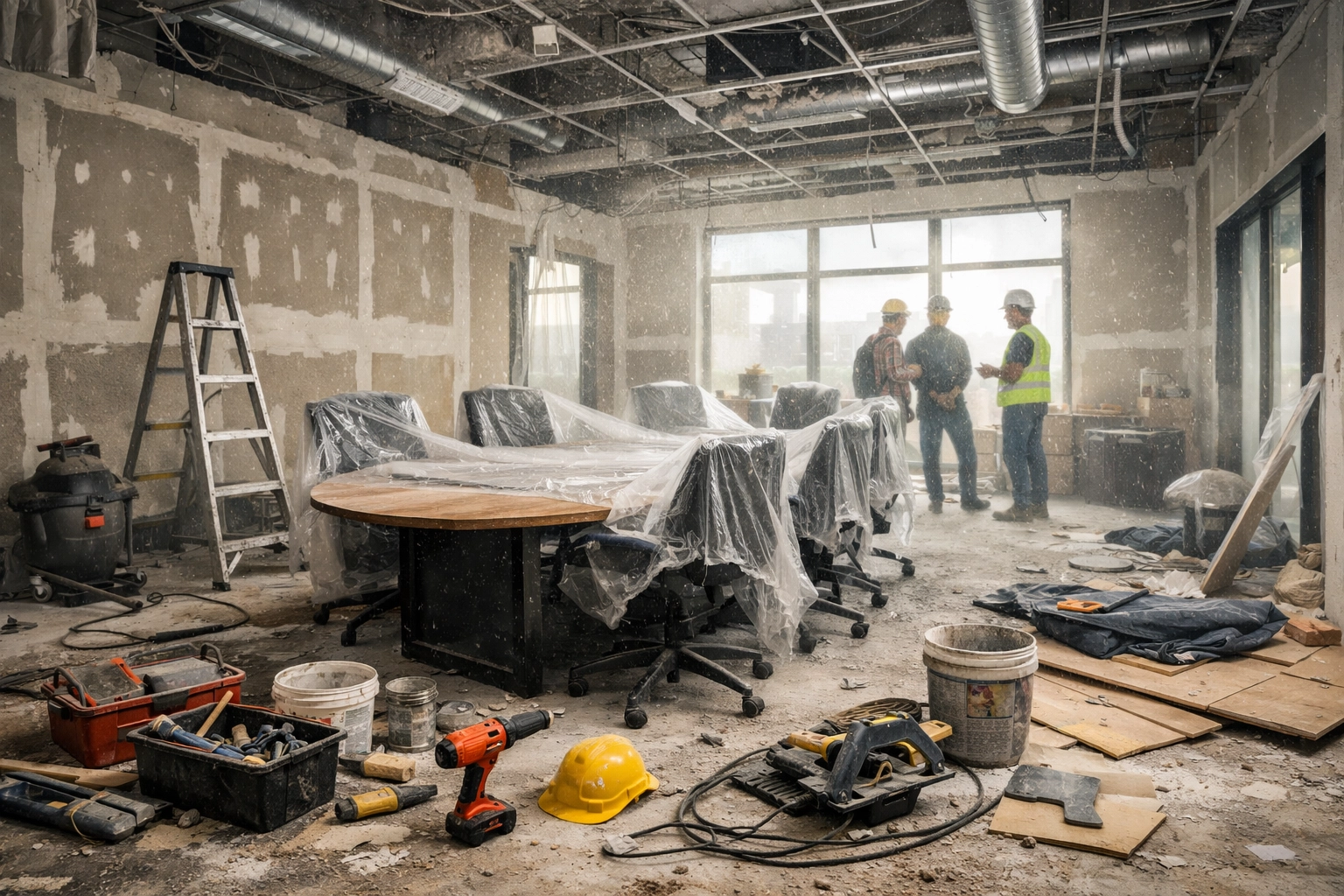
And here’s the kicker: once it’s built, it’s permanent. If your office layout needs change in six months (and let’s be honest, they will), you’re stuck with a room that can’t move, can’t flex, and definitely can’t follow you to your next location.
Enter the Acoustic Pod: Your Turnkey Solution
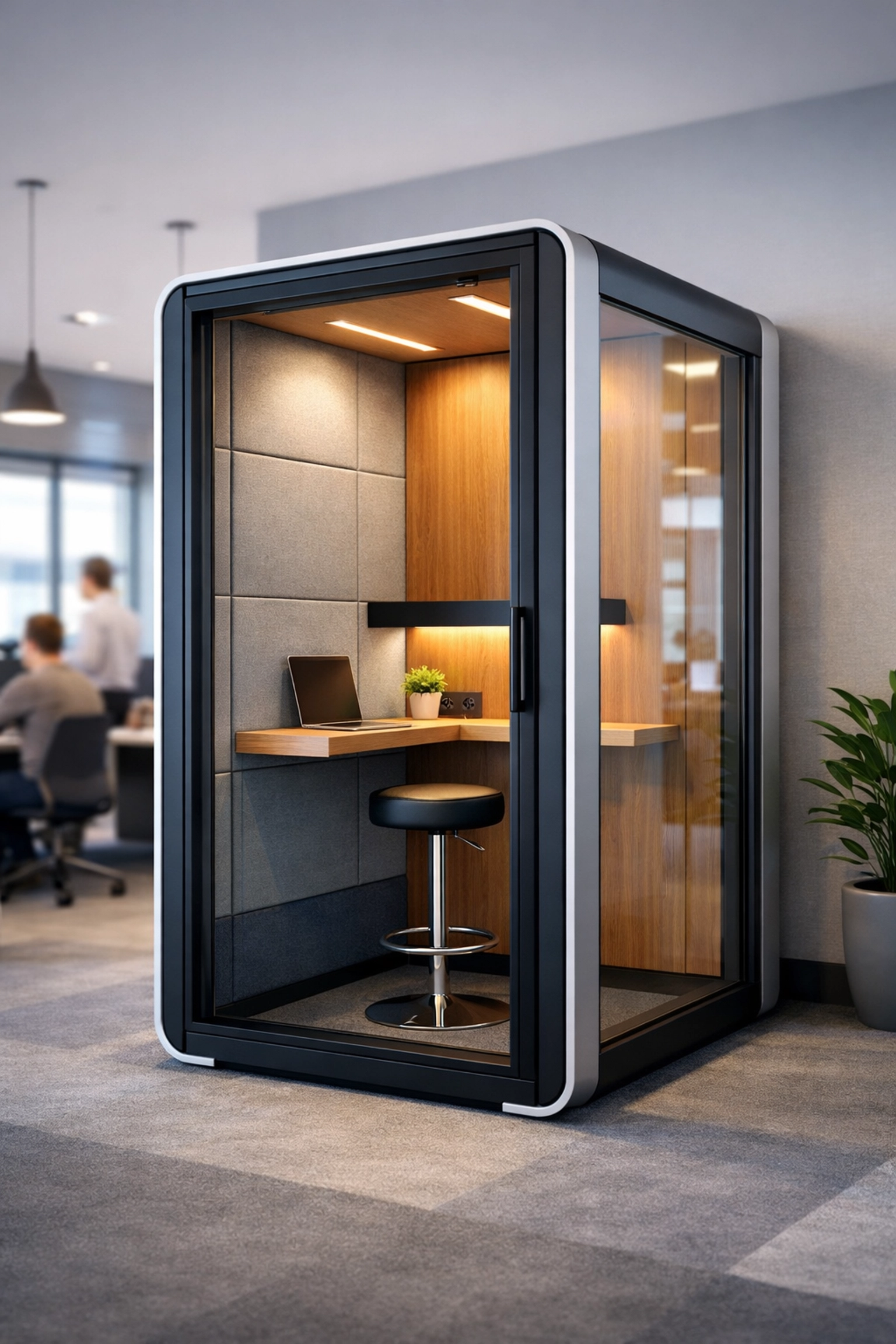
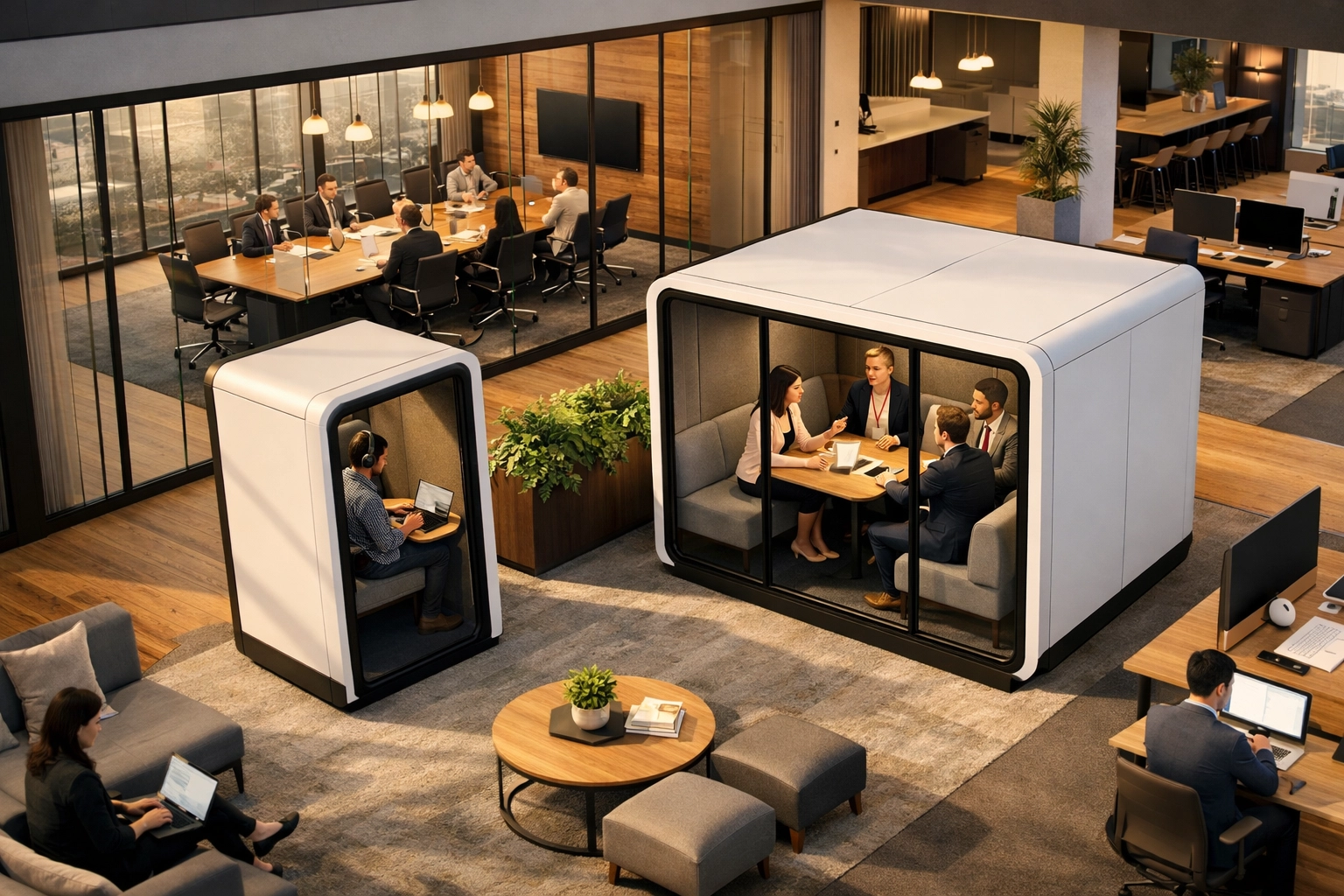
Office privacy pods are the swiss army knife of commercial office furniture. These prefab units arrive mostly assembled, install in hours (not weeks), and require zero construction permits in most cases.
Average cost for acoustic pods:
- Solo/phone booth pod: $4,000–$8,000
- 2-person meeting pod: $8,000–$12,000
- 4-person conference pod: $12,000–$18,000
Installation? Usually same-day. Disruption to your team? Minimal. Ability to relocate when you move offices next year? Priceless.
These aren’t your college roommate’s cardboard partition. Modern acoustic pods feature professional-grade soundproofing (some hitting 30+ decibel reduction), built-in ventilation, power outlets, USB ports, and even integrated lighting. They’re designed specifically for the flexible office solutions that actually match how businesses grow in 2026.
The Flexibility Factor (Where Pods Win Big)
Let’s talk about what happens when your business scales. You hire 15 new people. Suddenly your carefully planned office layout is bursting at the seams.
With traditional conference rooms: You’re looking at another round of construction, more permits, more downtime, and more five-figure invoices. Want to rearrange your floor plan? Good luck moving those walls.
With acoustic pods: You literally wheel them to a new spot. Need more? Order another pod. Downsizing? Sell it or move it to a different location. Opening a second office in Dallas? Take a few pods with you.
This modularity is especially critical for growing companies in competitive markets like Atlanta and Texas, where commercial real estate costs keep climbing and conference room design needs to adapt quickly.
Installation Speed: Hours vs. Weeks
Time is money, especially when you’re trying to grow. Here’s what the installation timeline actually looks like:
Traditional conference room:
- Week 1-2: Permits, planning, contractor scheduling
- Week 3-5: Framing, electrical, HVAC work
- Week 6-7: Drywall, finishing, paint
- Week 8: Final touches, furniture, tech setup
- Total: 6-8 weeks minimum
Acoustic pod:
- Day 1: Delivery and placement
- Day 1 (2-4 hours later): Fully installed and operational
- Total: Same day
For office managers juggling tight deadlines and demanding executives, this speed advantage isn’t just convenient: it’s a competitive edge.
Soundproofing: The Reason Any of This Matters
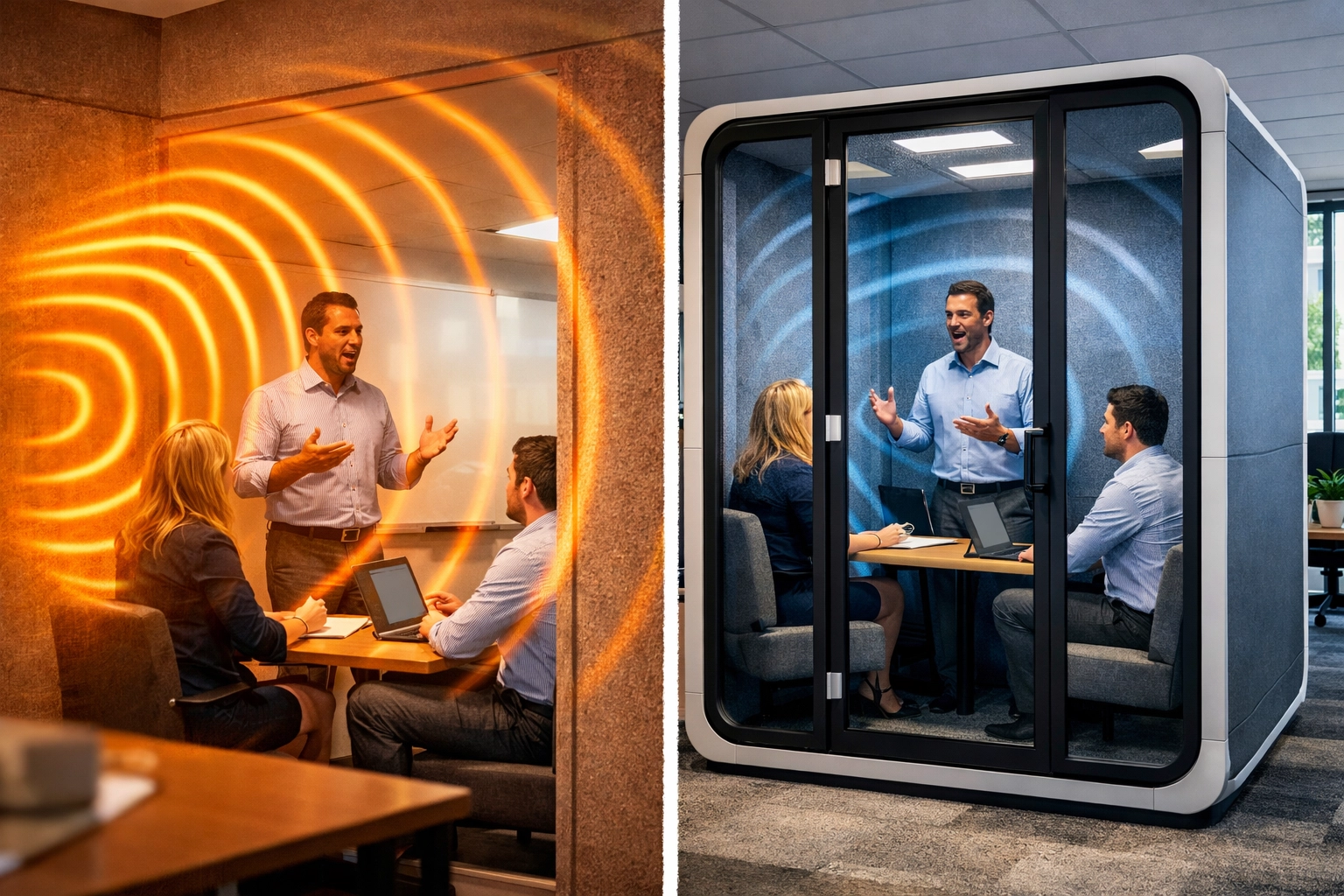
Neither option is worth anything if people can still hear every word through the walls. This is where the engineering behind acoustic pods really shines.
Traditional conference rooms can be soundproofed well, but it requires proper planning, quality materials, and skilled installation. Many cheaper builds skip adequate soundproofing to save costs, leaving you with expensive rooms that still leak every confidential conversation into the open office.
Quality acoustic pods are specifically engineered for sound isolation. The best ones feature:
- Double-wall construction with sound-dampening materials
- Acoustic foam panels
- Sealed doors with proper gaskets
- Integrated ventilation that doesn’t compromise sound blocking
Result: Speech privacy ratings of 30 dB or higher, meaning normal conversations inside are nearly inaudible outside.
When Traditional Conference Rooms Still Make Sense
Look, we’re not saying conference rooms are obsolete. There are absolutely scenarios where building out makes more sense:
You need a traditional conference room if:
- You regularly host 8+ person meetings
- You need a permanent brand showcase space for client presentations
- You’re in a long-term lease (10+ years) with no plans to relocate
- You need custom AV integration that pods can’t accommodate
- You want a specific architectural aesthetic that matches your office design
For larger organizations with stable footprints, investing in 1-2 well-designed traditional meeting rooms as anchor spaces can make sense. But for the flexible meeting and focus spaces that every growing office needs? Acoustic pods win on practically every metric.
The Hybrid Approach: Best of Both Worlds
Here’s what smart office managers in Atlanta and Texas are actually doing: they’re mixing both solutions based on specific needs.
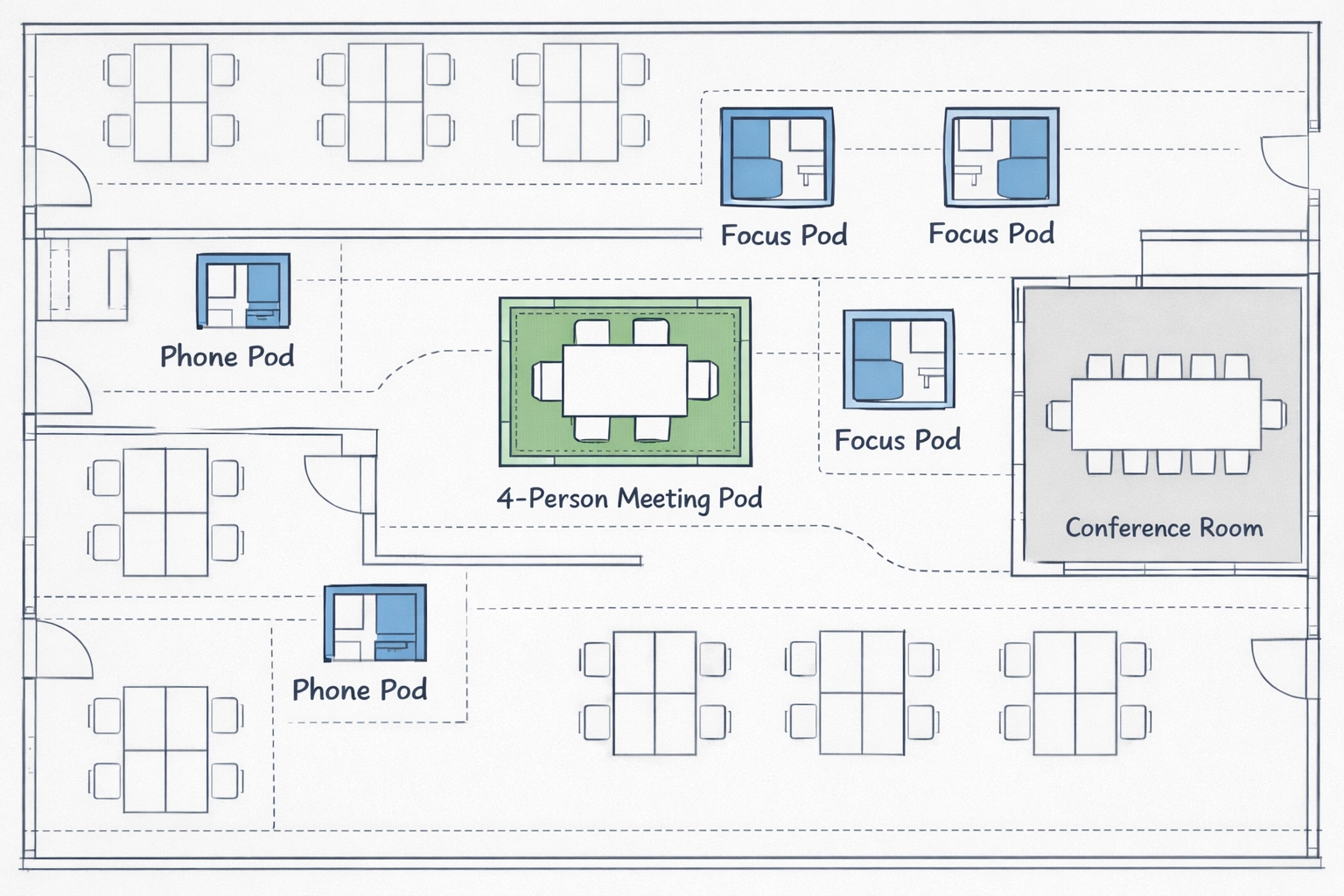
A balanced hybrid office layout might include:
- 2-3 solo acoustic pods for phone calls and focused work
- 1-2 four-person pods for small team meetings
- 1 traditional conference room for all-hands meetings and client presentations
This strategy gives you the flexibility of pods for day-to-day needs while maintaining one premium space for formal gatherings. As your business grows, you can scale up pod capacity incrementally without major construction projects.
What About Maintenance and Longevity?
Traditional conference rooms require ongoing maintenance: paint touch-ups, carpet cleaning, furniture replacement, and occasional HVAC servicing. The walls are permanent, but everything inside them degrades over time.
Acoustic pods are designed for commercial durability with materials that resist wear and tear. Most manufacturers offer warranties of 5-10 years. Since they’re modular, individual components can be replaced without rebuilding the entire unit. And because they’re movable, you can reposition them to extend carpet life in your office.
Making the Decision for Your Office
So which option is better for your growing office? Ask yourself these questions:
- How likely are you to move or reconfigure in the next 3 years? (High likelihood = pods)
- What’s your realistic timeline? (Need space now = pods)
- What’s your budget flexibility? (Lower upfront costs = pods)
- How large are your typical meetings? (Mostly 1-4 people = pods)
- Do you value adaptability over permanence? (Adaptability = pods)
If you answered in favor of pods for most of these questions, the choice is pretty clear.
Why Solaris Gets It
At Solaris Commercial Accessories, we’ve spent 25+ years helping businesses across Atlanta and Texas solve exactly these space planning challenges. We’ve seen the office furniture landscape shift from cubicle farms to open plans to hybrid models: and we know that flexible office solutions aren’t just a trend, they’re a survival strategy.
Whether you’re a startup scaling fast, an established company adapting to hybrid work, or anywhere in between, we can help you design an office layout that actually works for how your team operates today and how it’ll grow tomorrow.
The Bottom Line
Acoustic pods offer faster installation, lower costs, superior flexibility, and comparable (or better) soundproofing compared to traditional conference room construction. For growing offices that need to stay agile, they’re the smart choice.
Traditional conference rooms still have their place for large gatherings and permanent showcase spaces, but for the 80% of meeting and focus needs in a modern office? Pods deliver better ROI, faster implementation, and the flexibility that growing businesses actually need.
Ready to explore options for your office? Get in touch with our team and let’s figure out the best commercial office furniture solution for your space. We’ll help you skip the construction headaches and get straight to the productive workspace your team deserves.