

Designing for Success: 5 Commercial Furniture Trends Every Office Needs in 2026
![[HERO] Designing for Success: 5 Commercial Furniture Trends Every Office Needs in 2026](https://cdn.marblism.com/f6J72s0grc8.webp)
The modern office is no longer just a place to work: it’s a strategic asset that can make or break your business. In 2026, the connection between thoughtful workspace design and employee productivity, retention, and well-being has never been clearer. As hybrid work models continue to evolve and the competition for top talent intensifies, business owners are discovering that the right furniture choices can deliver measurable returns on investment.
At Solaris Shading Systems, we’ve expanded our commercial accessories division to include custom furniture solutions because we understand that a truly cohesive office environment requires more than just exceptional window treatments. It demands furniture that works as hard as your team does. Here are the five commercial furniture trends that forward-thinking businesses are embracing in 2026.
1. Flexible & Modular Workspaces: Furniture That Moves With You
The days of fixed, permanent office layouts are over. Today’s businesses need furniture ecosystems that can adapt on the fly as teams restructure, project demands shift, or hybrid schedules change throughout the week.
Modular furniture systems have become the new standard, replacing static desks and dividers with reconfigurable elements that can be reassembled quickly without calling in a contractor. These systems extend far beyond simple movable tables: they include shared storage solutions, collaborative elements, flexible boundaries, and partition systems that teams can reorganize themselves.
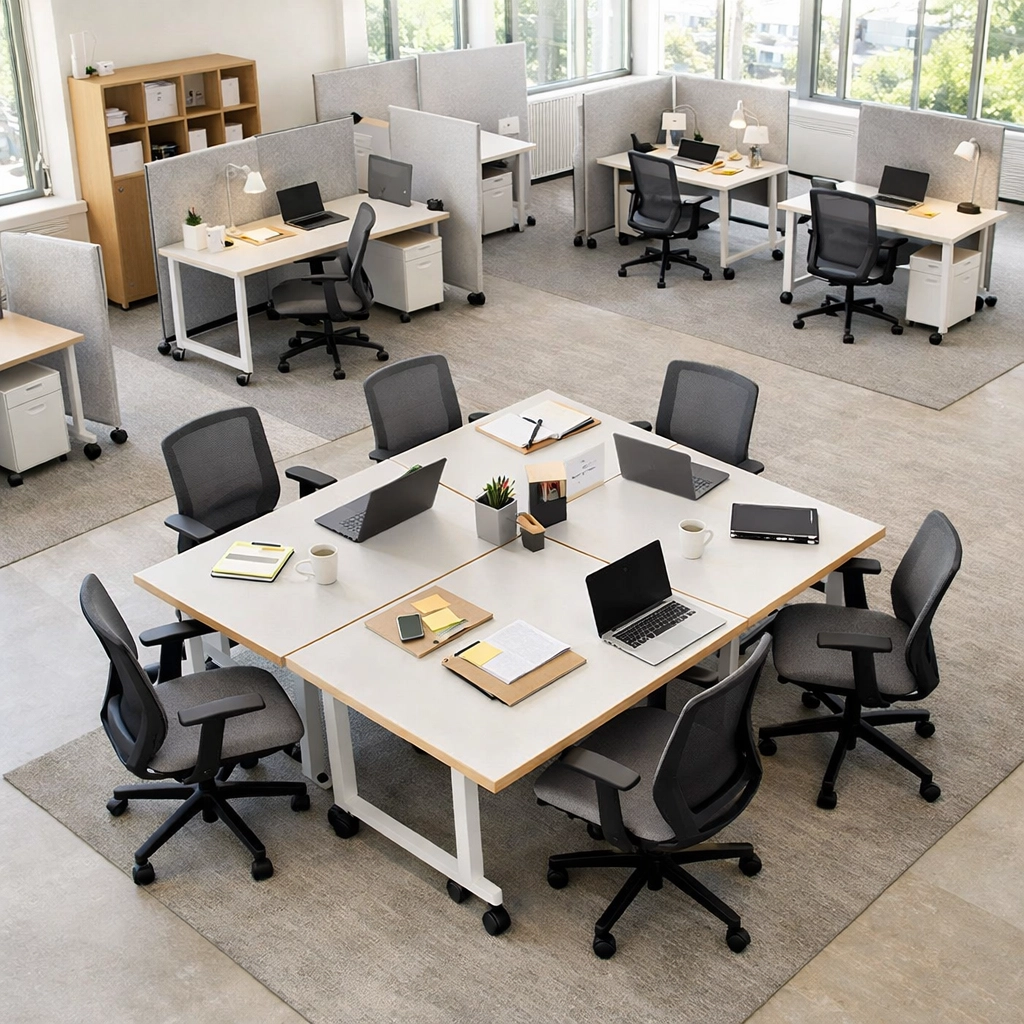
Think of it this way: when your marketing team needs to huddle for a three-day sprint, they can pull together workstations into a collaborative cluster. When the project wraps, those same pieces seamlessly transition back into individual focus zones. This level of flexibility isn’t just convenient: it’s essential for businesses that need to maximize their real estate investment while supporting different work styles.
The beauty of modular design is that it grows with you. Adding new team members doesn’t require a complete office overhaul, just additional components that integrate with your existing setup.
2. Sustainable & Eco-Friendly Materials: From Intent to Action
Sustainability in commercial furniture has evolved dramatically. In 2026, businesses are moving beyond vague “eco-friendly” marketing claims to demand transparent, audit-ready decisions backed by verified data.
Today’s sustainable furniture features verifiable recycled content, repairable components designed for longevity, and clear material sourcing documentation. Forward-thinking manufacturers are creating products designed for disassembly and end-of-life reuse, complete with buy-back programs that close the loop on the circular economy.
For business owners, this shift represents both environmental responsibility and smart financial planning. Durable, well-made furniture that can be repaired rather than replaced reduces long-term costs while supporting your company’s sustainability goals. It’s also increasingly important for attracting environmentally conscious employees and clients who expect businesses to walk the talk on corporate responsibility.
Responsibly sourced materials: from certified timber to low-VOC finishes: also contribute to healthier indoor air quality, creating a better environment for your team to work in every single day.
3. Integrated Technology: Power Where You Need It
In 2026, furniture must keep pace with our increasingly connected work lives. The modern office requires seamless integration of power access, wireless charging capabilities, and intelligent cable management built directly into workstations and collaboration spaces.
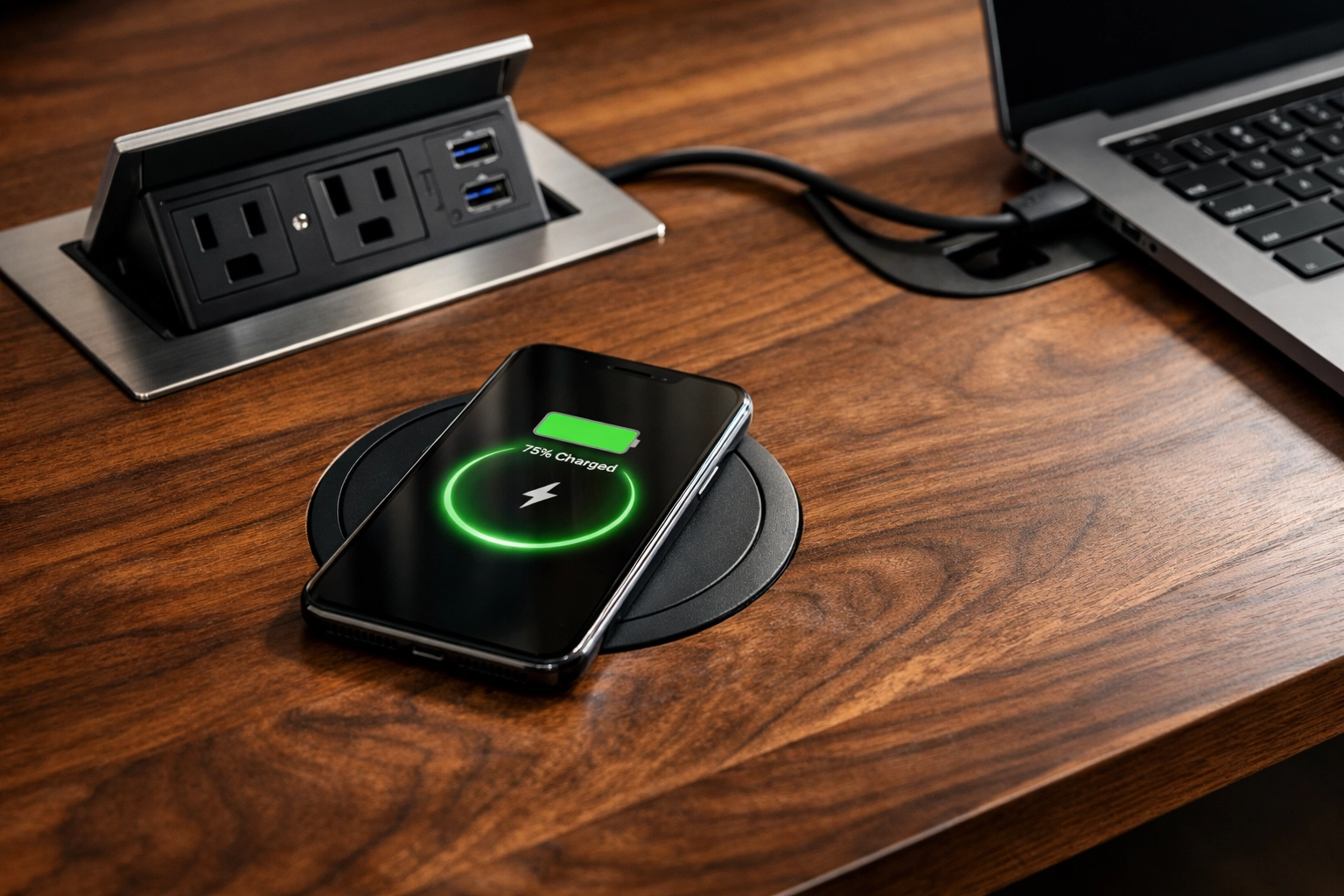
Gone are the days of employees hunting for outlets or dealing with tangled cable nests under their desks. Today’s commercial furniture incorporates power solutions where they’re actually needed: at desk surfaces, in meeting tables, and throughout collaborative zones. Wireless charging pads embedded into desk surfaces, pop-up power modules, and integrated USB-C ports ensure that laptops, phones, and tablets stay charged throughout the workday.
This isn’t just about convenience. Proper tech integration reduces visual clutter, enhances safety by minimizing trip hazards, and supports productivity by eliminating those frustrating moments when someone’s device dies mid-presentation or right before an important call.
When paired with smart window treatments from Solaris Shading Systems: like motorized shades that adjust automatically based on time of day or sunlight intensity: the entire office becomes a synchronized, tech-enabled environment that supports focus and efficiency.
4. Ergonomic-First Design: Wellness as Standard, Not Premium
Here’s a shift that matters: ergonomic office furniture is no longer treated as a premium upgrade reserved for executives. In 2026, it’s the expected baseline for every workstation, driven by both employee wellness priorities and employer duty of care requirements.
The modern approach to ergonomics has evolved beyond finding “the one perfect chair.” Instead, it recognizes that people work in multiple postures throughout the day: sitting, standing, perching, and leaning: and that choice and micro-adjustment capabilities are essential.
Adjustable sit-stand desks allow employees to alternate positions throughout the day, reducing the health risks associated with prolonged sitting. Chairs with proper lumbar support, adjustable armrests, and seat depth customization ensure that each person can dial in their ideal comfort level. Monitor arms enable proper screen positioning to reduce neck strain and eye fatigue.
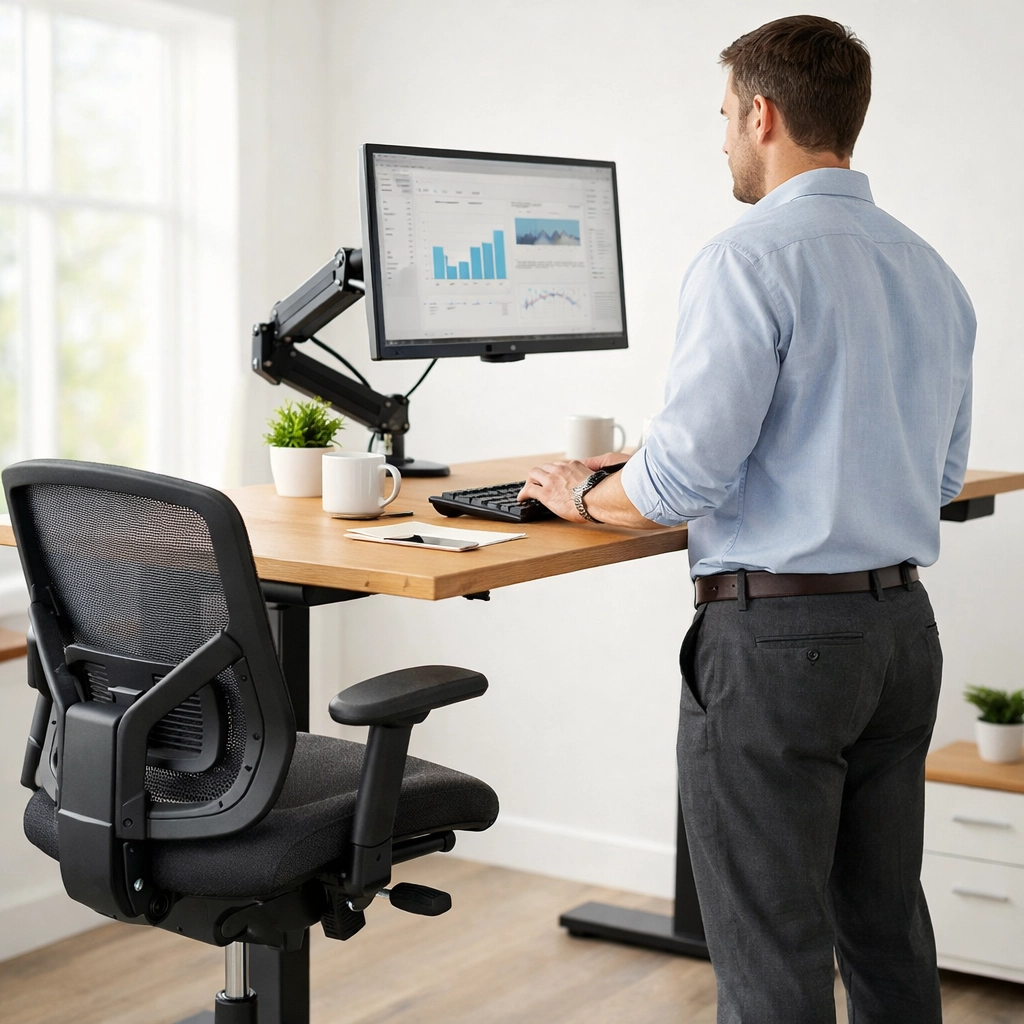
This trend is especially relevant in hot-desking and shared workspace environments where multiple employees use the same stations. Furniture that quickly adjusts to different body types and working preferences ensures everyone can work comfortably, regardless of which desk they claim on any given day.
The return on investment is clear: reduced absenteeism due to back pain and repetitive strain injuries, improved focus and productivity, and a tangible demonstration that you value your team’s long-term health and well-being.
5. Biophilic Design Elements: Bringing Nature Indoors
The final trend transforming commercial spaces in 2026 is biophilic design: the intentional integration of natural elements into the built environment. Research consistently shows that exposure to nature, even indirectly, reduces stress, enhances creativity, and improves overall mental health.
In practice, this means furniture and design elements that incorporate natural materials, organic shapes, and opportunities to integrate living plants into the workspace. Think wooden desk surfaces with visible grain patterns, planters built into partition systems, green walls that double as acoustic treatments, and furniture in earth-tone palettes that create a calming atmosphere.
Natural light management is equally critical to biophilic design, which is where Solaris Shading Systems’ expertise becomes invaluable. Our custom window treatments can maximize natural light penetration while controlling glare: creating bright, energizing spaces that connect employees to the outdoors without the productivity-killing issues that come with uncontrolled sunlight.
The combination of nature-inspired furniture, living plants, and thoughtfully managed natural light creates work environments where people genuinely want to spend time, boosting both recruitment and retention efforts.
Creating Cohesive Commercial Spaces With Solaris
As businesses recognize that office design directly impacts their bottom line, the demand for comprehensive solutions has never been higher. That’s exactly why Solaris Shading Systems now offers custom commercial furniture alongside our signature window treatments, motorized shading systems, and commercial accessories.
We understand that creating a truly effective workspace isn’t about choosing furniture and window treatments separately: it’s about crafting a cohesive environment where every element works together. When your furniture supports flexible collaboration and your window treatments automatically adjust to optimize natural light throughout the day, you’ve created a space that actively supports productivity rather than just housing it.
Whether you’re outfitting a new office, refreshing an existing space, or adapting to hybrid work realities, our commercial division can provide end-to-end solutions that incorporate these essential 2026 trends. From modular workstations and ergonomic seating to sustainable materials and tech-integrated designs, we’ll help you create an office environment that attracts talent, supports well-being, and positions your business for success.
Ready to transform your commercial space? Contact Solaris Shading Systems to schedule a consultation and discover how our expanded furniture offerings can complement our industry-leading window treatment solutions to create the office your team deserves.